Friday, May 23, 2014

Flowers of Ecuador's Páramo

We can't leave Ecuador without including a few photos of the spectacular flowers at Papallacta Pass near Quito! I don't know what most of them are, but hope that you'll enjoy them anyway.

The area is within Cayambe-Coca National Park, at about 12,000 feet in elevation.

Strange and beautiful
(Photos by Narca)

A lovely composite

One of the many cushion plants that are common to high elevations the world around

Judging by the leaf, this is one of the 4500 species of melastome.

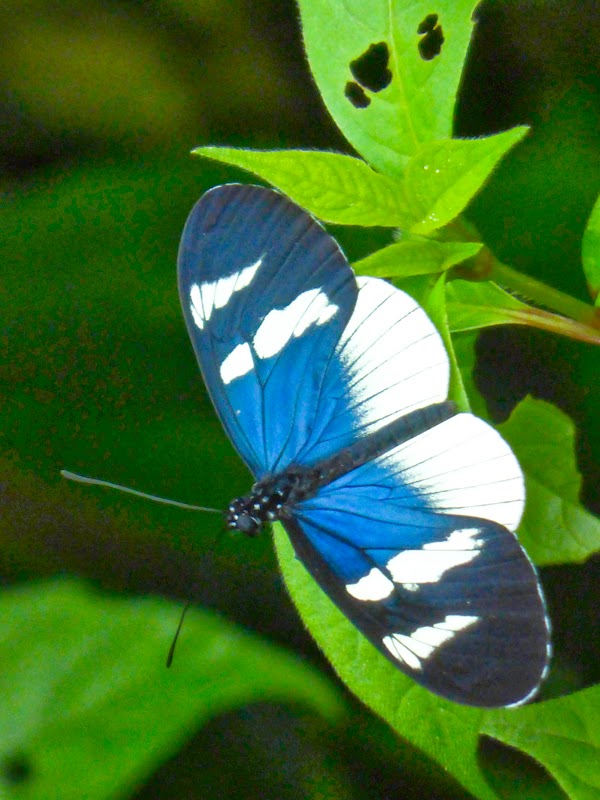
Perhaps a day-flying moth? I can't find a heliconid anything like it!

At last, something familiar –– a paintbrush

A pea with very compact flowers

Distinctive –– does anyone know this one?

Another puzzle

Hummers like this Bromerea species, shown here with Equisetum.

A passion flower, Passiflora mixta, with only a rudimentary fringe around the pistil and stamens. This plant is mainly – or only – pollinated by Sword-billed Hummingbirds (photos above and below)


Sword-billed Hummingbird photographed on a 2010 trip to Ecuador.

This aster, another composite, is a conspicuous shrub.

A species of Solanum, in the tomato family

Farewell to Ecuador, for the time being –– and next stop: Baja California's cape region!

Thursday, May 22, 2014

Papallacta Pass in Ecuador's Andes

Our final day in Ecuador is exhilarating, in the high reaches of the Andes at Papallacta Pass, not far from Quito. The weather couldn't be better –– and it's often a challenge here!

Looking down on the páramo from the heights near Papallacta Pass
(Photos by Narca)

Improvements to the highway from Quito that goes over the pass have made access to the countryside much more difficult. We pull off near the crest and study the situation –– we have been here several times before, and know there is access! –– and find the obscure dirt road that drops from the north side of the highway, and meanders to the guard post for the reserve here. After passing the guard's inspection, we mosey up the road that climbs to the towers atop the mountain.

Among the most sought-after birds in the high Andes is the Rufous-bellied Seedsnipe, a cryptic bird the size of a ptarmigan. I have only seen this seedsnipe once before, in Peru's high country, and then from a great distance. We are very lucky today. One flies in, calling and circling the towers, before landing on the ground not far away.

Rufous-bellied Seedsnipe, a distant relative of our sandpipers and plovers, and not related to the grouse and ptarmigan it resembles!

Other high-elevation specialists also appear, including the striking Carunculated Caracaras.

 Carunculated Caracaras, with a pair below


After an hour or so at the towers, we return through the guard post, and follow the road in the other direction, moving downhill into shrubbier habitat.

A last glimpse of the páramo at Papallacta Pass

Here Andean Condors and Black-chested Buzzard-Eagles are soaring overhead.

Black-chested Buzzard-Eagles show a distinctive, short-tailed silhouette.

Andean Condors are always a treat!

The rustling branches of a flowering composite eventually part, to reveal a charming tit-spinetail.

Andean Tit-Spinetail

 Polylepis trees provide refuge for other species.

A Bar-winged Cinclodes on a Polylepis branch

Plumbeous Sierra-Finch is characteristic of the high Andes...

...as is the widespread Rufous-collared Sparrow.

Perky Shining Sunbeams are quite the fun hummingbird!

Among the shrubs is a familiar mammal.

Brazilian Rabbit

Lower down, in the forest, we find the last Roadside Hawk of the trip, ensconced in bromeliads.

Roadside Hawk

Wednesday, May 21, 2014

A Few Last Tidbits from Buenaventura Reserve

As we explore Buenaventura Reserve in Ecuador, the roars of howler monkeys rumble through the forest, Nine-banded Armadillos rummage through the leaf litter, and Two-toed Sloths clamber about the trees.

A foraging Nine-banded Armadillo bumbles into my feet, 
before realizing his mistake. (Photos by Narca)

Beautiful beetles...

...and butterflies like this heliconid

...and this Scarlet Peacock enliven the trails.

The plants are also striking. 


A flowering bromeliad


Why would a plant have red tips on its leaves?? I'm sure that a botanist out there can answer that! Aldous Huxley would have credited it to the exuberance of nature.... and perhaps that's as good an answer as one derived from chemistry and the study of ecological adaptation! One feeds our knowledge; the other buoys our spirits.


Tuesday, May 20, 2014

Hummingbirds at Buenaventura Reserve

One of the finest hummingbird shows anywhere is here, on full and dazzling display from Buenaventura Reserve's front porch. The number of individuals is astonishing –– far too many for the birds to waste much time in skirmishing. We tally eleven species of hummers during our two days in the reserve, mostly at the feeders, although some like the Wedge-billed Hummingbird only appear for us in the surrounding forest.

Hummingbirds crowd around the megafeeders at Buenaventura Reserve.
(Photos by Narca)

An Andean Emerald, demure for a hummingbird!

Blurry photo of a Blue-chested Hummer, quite rare this far south

Many Brown Violetears frequent the feeders.

A tiny Green Thorntail female watches the commotion.

Male and female White-necked Jacobins, a common and widespread species

A striking male White-necked Jacobin

Little Violet-bellied Hummingbirds are among my favorites.

A slight turn shows this Violet-bellied's splendor!

World Land Trust operates a webcam which shows the hummingbird feeders at Buenaventura. I haven't yet found it working properly, but perhaps they will repair it soon –– it's well worth a look!

Monday, May 19, 2014

Back to Buenaventura's Birds

The treasures of Buenaventura don't end with its umbrellabirds. Among its other notable personages is the endangered El Oro Parakeet, endemic to a small region in southwestern Ecuador. Its range is thought to be only 60 miles long from north to south, by only 6 miles wide. Population estimates range from 250 to fewer than 1000 mature individuals.

The Jocotoco Foundation's Buenaventura Reserve is the stronghold for this species, in a region of highly fragmented habitat. Year-round, 60 parrots live in the reserve, with their numbers doubling seasonally as others return to the reserve from nearby areas.

Statue of El Oro Parakeet in nearby Piñas...
(Photos by Narca)

...and the Real McCoy, a mated pair of El Oro Parakeets

Lack of nest sites is thought to be a major threat to the parrots' survival, and the Jocotoco Foundation has put up nest boxes as a remedy. The parrots are occupying at least 15 of those nest boxes, and young have been fledging from the boxes since 2007.

We walk the reserve's trails and roads for two days. The birding is superlative. One of my favorites is the Club-winged Manakin –– we hear many, see a few, and none cooperate for the camera.

Here's a very small sampling of the reserve's birds!

Among many tanagers are the gorgeous Blue-necked...

and the locally abundant Lemon-rumped Tanager.

Striking Chestnut-mandibled Toucans are widespread in tropical America.

A more range-restricted Pale-mandibled Araçari, cousin to the toucan

Northern (Crested) Caracaras range all the way north into the US.

A Plumbeous Kite on her nest

 Pacific Horneros live only in western Ecuador and northwestern Peru, 
where they are common and conspicuous.

This Broad-billed Motmot shows more green on the belly than the similar Rufous Motmot.

The next post will bring you photos of other Buenaventura critters!

Sunday, May 18, 2014

Great Conservation News from Ecuador!

Ecuador's Jocotoco Foundation and the US-based Rainforest Trust have purchased a final, key property to "create a permanent refuge for the largest population of Andean Condors in the Northern Andes." Woolly Tapirs and Spectacled Bears also roam those hills.

 Andean Condor in Cayambe-Coca National Park
(Photos by Narca)

The newly-acquired Hacienda Antisanilla lies at the foot of the towering Volcán Antisana, and was one of the former private inholdings within the Antisana Ecological Reserve. These inholdings were being converted from forest to pasture and farmland; fires which started there burned into the reserve; illegal poaching based from the inholdings was rampant and difficult to control; and the most important watershed for the city of Quito was being undermined. Now effective preservation of both the reserve and Quito's watershed can be achieved.

Antisana Ecological Reserve is important not only in its own right, but also as a corridor between two national parks –– Gran Sumaco and Cayambe-Coca (more on Cayambe-Coca in a future post!).

Sign for Cayambe-Coca National Park at Papallacta Pass

Acquisition of this final property completes the effort to bring effective protection to 1.8 million acres of Andean and Amazonian ecosystems.

How needed was this reserve? All it takes is a two-day drive down the Andes from Quito south to the Peruvian border, to see just how much forest in Ecuador has already been lost. Along many stretches, for mile after mile, the country is denuded, and the tiny forest remnants are pitiful indeed. The few scattered reserves in the region are critically important.

If you'd like to read more about this project and other inspiring Rainforest Trust efforts in Bolivia, Peru, Brazil and Colombia, check out their latest newsletter.


Friday, April 11, 2014

Buenaventura's Umbrellabirds

Buenaventura Reserve protects a remnant patch of tropical cloud forest at about 3000 feet elevation. The cloud forest occupies a narrow zone, and most of the surrounding land holds seasonal tropical dry forest. Another jewel in the Jocotoco Foundation's system of reserves, Buenaventura is small, only about 6 square miles. Yet it protects 12 globally threatened species of birds, another 30 rare and regionally endemic birds, and notable mammals like the Ocelot, Mantled Howler Monkey, and Two-toed Sloth.

The reserve has been cobbled together since 1999 from patches of forest and old pasture land. The cleared areas are now being reforested, with the help and support of local communities. Growth of the reserve itself continues; the target size is about 20 square miles, or more than three times its current size. 


Remnant cloud forest at Buenaventura Reserve 
(Photos by Narca)

Welcome to Buenaventura Reserve!

Graceful Swallow-tailed Kites are frequent

Soon after we check into Umbrellabird Lodge (actually it's a more casual affair than "checking in" implies!), we ask about the famous umbrellabird lek, and learn that it's only about a 10-minute walk from the lodge. Young Leo is appointed to show us the spot. We learn that the umbrellabirds are most active early in the morning, but there's a chance that we can see them at dusk as well. And see them we do!

Umbrellabirds are big, very odd cotingas, an exclusively New World family. The male sports a long, inflatable wattle hanging from the center of his chest, used in courtship. They also boast an impressive crest, which shadows their faces and bills. During breeding season, the males gather under the forest canopy at a traditional lek to strut and perform before the females. Their low-pitched booming calls carry far through the forest.

Of the three species of umbrellabirds, two are in Ecuador. The Amazonian Umbrellabird is scarce and local; we met it in Podocarpus National Park. Buenaventura has the Long-wattled, a bird I have never seen before. It lives up to its name: the wattle can be as long as the whole body! The Long-wattled is also exceedingly rare.

A male Long-wattled Umbrellabird, with his astounding wattle

Looking up at the umbrellabird and his feathered wattle; 
the eye is actually dark –– here you're seeing reflected light.

For comparison, here's a male Amazonian Umbrellabird, with his short wattle and pale eye. From most angles, you'd also see a white patch at the base of his crest, making a great spotlight that's obvious even from a distance.

Male Amazonian Umbrellabird

The trail to the umbrellabirds is steep, but very well maintained, with a sturdy metal railing where it's needed. Buenaventura has adopted the best system I've seen for dealing with mud: the concrete steps have been poured into small tires (that untrustworthy toy size that rental and new cars sometimes use). The result is a stable, easy-to-use trail through otherwise slippery terrain. A far better use for that kind of tire than on an automobile!

Dusk catches us on the trail. Further exploration awaits another day!